
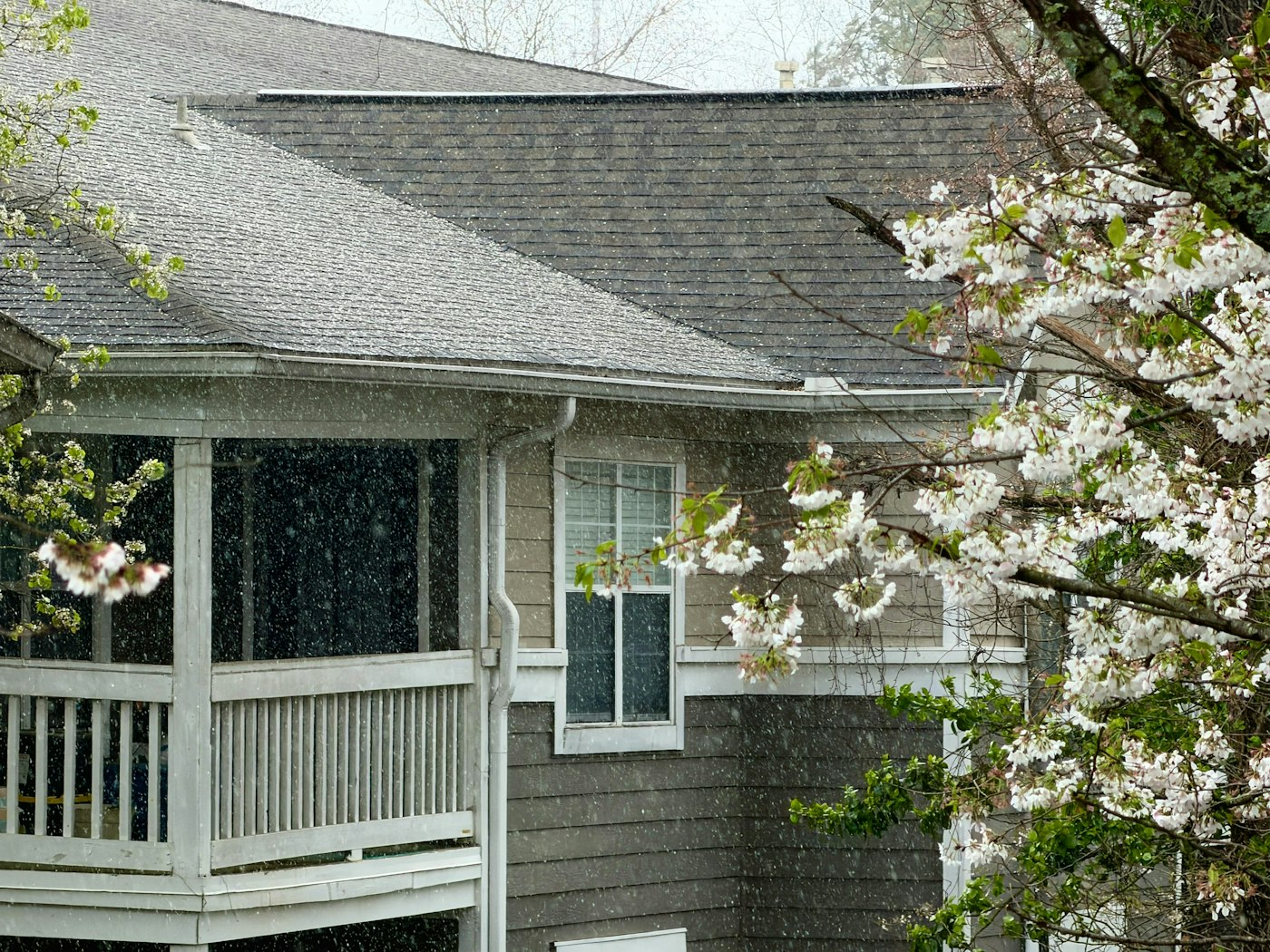
Renting trains you to call someone when something breaks. Owning trains you to notice things before they do. The first spring in a new home is the best time to build that habit, because winter has just tested the house and the mild weather makes it easy to look around. Here is a checklist to work through over a few weekends.
Walk the outside
- Clean gutters and downspouts, and make sure water discharges several feet from the foundation. Add extensions or splash blocks where it does not.
- Look at the roof from the ground with binoculars for lifted, cracked or missing shingles and for debris in valleys. Leave climbing to a professional.
- Check that soil slopes away from the house. Low spots next to the foundation collect water and should be filled.
- Inspect siding, trim and the caulk around windows and doors for gaps, peeling or soft spots.
- Turn on outdoor faucets and check for leaks inside where the pipe enters the house, a common site of freeze damage.
- Look over decks, steps and railings for loose boards and wobbly posts.
Check the systems
- Replace the furnace filter and schedule a service visit for the air conditioning before the first hot week, when technicians get busy.
- Clear leaves and debris from around the outdoor air conditioning unit and keep plants trimmed back from it.
- Look at the water heater for rust, moisture or corrosion at the fittings, and note its age from the label.
- If you have a sump pump, pour water into the pit to confirm it turns on and discharges outside.
- Test smoke and carbon monoxide detectors and replace batteries. Note the manufacture dates; detectors have a service life.
- Clean the dryer vent from the dryer to the outside, which reduces a real fire risk.
- Press the test button on GFCI outlets in kitchens, baths, garage and outdoors.
Tend the yard
Rake out beds, prune dead wood, and learn what you have before you cut; a plant that looks like a dead stick in April may be a late starter. Look at trees for broken limbs, especially those over the house, driveway or power lines, and call an arborist for anything large. If the home has an irrigation system, run each zone and look for broken heads and soggy spots. Reseed bare lawn areas and sharpen the mower blade.
Look inside with fresh eyes
- Open every window, check that it locks, and repair screens before bug season.
- Visit the attic with a flashlight after a rain and look for stains, daylight or damp insulation.
- Check the basement or crawlspace for dampness, musty smells and white mineral deposits on walls.
- Run water in rarely used sinks and tubs, and look under every sink for drips.
- Vacuum refrigerator coils and bathroom exhaust fan covers.
Start a record
Keep a simple file, paper or digital, with the age and model of each major system, the dates of filter changes and service visits, paint colors, and receipts for repairs. Add the manuals the previous owner left and any you download. Set calendar reminders for the recurring items: filters, gutters, detector batteries, the fall version of this list. A year from now you will know your home’s habits, and when a problem does arise, you will have the history a repair technician needs. That record also becomes part of what you hand to the next buyer, whenever that day comes.
North Georgia Spring Notes for New Homeowners
Homes in Cartersville, Bartow County and the surrounding North Georgia communities share a few seasonal habits worth knowing in your first year.
- Pollen season. Spring pollen can coat screens, porches, cars and outdoor units. Rinse the air conditioning condenser gently, change your HVAC filter more often during heavy pollen, and clean window screens.
- Spring storms. Heavy rain can test gutters, grading and basements. Walk the property during or just after a storm to see where water goes.
- Humidity ahead. As summer approaches, humidity rises. Make sure bathroom exhaust fans work, crawlspace vents or encapsulation are in good shape, and any dehumidifier is ready to run.
- Insects and pests. Warmer weather brings ants, wasps and other insects. Seal gaps around doors, windows and utility penetrations, and keep firewood and mulch away from siding.
- Well and septic. If your home has a private well or septic system, spring is a good time to learn its location and service history and to put recommended maintenance on your calendar.
Building Your Home’s First-Year Calendar
A simple maintenance calendar turns a long list into small, regular tasks. Here is one way to organize the first year:
- Monthly: check HVAC filters, test GFCI outlets, look under sinks and run water in rarely used fixtures.
- Every spring: clean gutters, service the air conditioning, inspect the roof from the ground and check exterior caulk and paint.
- Every summer: check the attic for heat and moisture, inspect decks and railings and watch for drainage problems after storms.
- Every fall: clean gutters again, service the heating system, shut off and drain outdoor faucets where needed and check weatherstripping.
- Every winter: watch for drafts, check for ice or freeze risks on exposed pipes and test detectors.
Common First-Year Mistakes
- Waiting for something to break. Small issues like a slow drip or a loose gutter are cheaper to fix early.
- Skipping the inspection report. Your home inspection report is a ready-made list of items to monitor. Revisit it in your first spring.
- Not knowing where shutoffs are. Locate and label the main water shutoff, the electrical panel and the gas shutoff, if your home has one.
- Doing risky jobs yourself. Roof work, electrical repairs and large tree work are often best left to licensed professionals.
- Losing warranty information. Register appliances and keep warranty paperwork in your home file.
New Homeowner Questions
How much should I budget for maintenance?
Costs vary widely with the home’s age, size and condition. Setting aside money regularly for repairs and replacements helps you handle surprises without stress.
Should I get a home warranty?
Some homeowners find one helpful, particularly for older systems. Read the terms closely to understand what is and is not covered.
When should I call a professional?
Whenever a task involves safety risks, specialized tools or licensed work, or when you are simply unsure. A professional opinion early can prevent a bigger repair later.


