
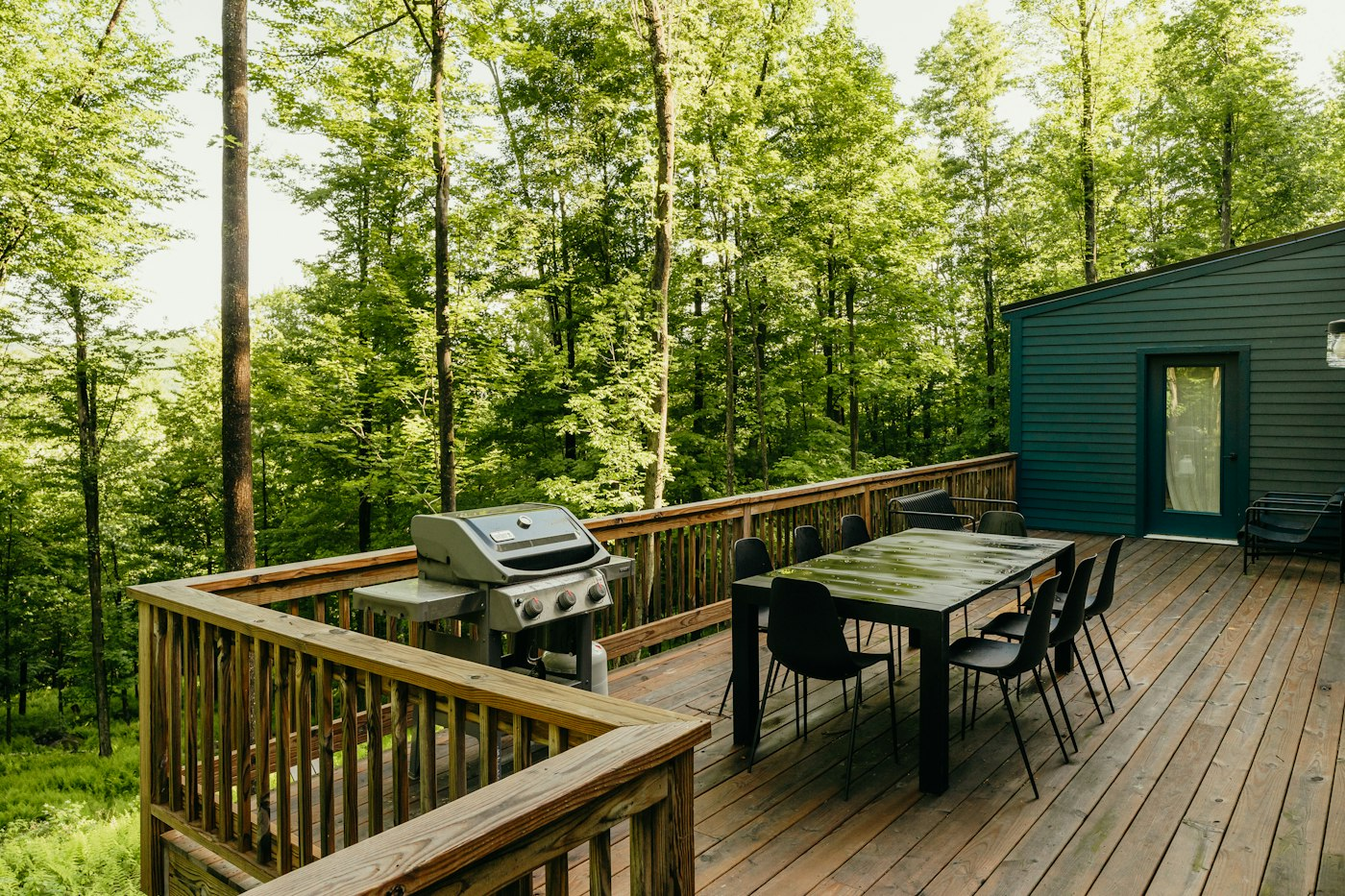
In winter, buyers barely glance at the deck. In April, they walk out onto it and picture dinner outside. Outdoor spaces are among the most emotionally persuasive parts of a spring showing, and they are often the most neglected. A few hours of work turns a bare slab or a weathered deck into a space buyers can see themselves using.
Safety and condition come first
Before anything decorative, make the space sound. Walk the deck and press on boards; replace any that are soft, cracked or splintering. Tighten or replace loose railings and balusters, and check that stairs are solid. Look underneath at posts and the board that attaches the deck to the house; any rot or rust there deserves a professional opinion, since a buyer’s inspector will look too. Hammer down raised nails or replace them with screws. For patios, reset heaved pavers and fill cracks. For porches, check floorboards, steps and ceiling for peeling paint or damage.
Clean and refresh the surfaces
Sweep thoroughly, then wash. Decks often need a dedicated cleaner to lift gray weathering and mildew; once dry, a coat of stain or sealer in a natural tone restores the wood and photographs beautifully. Concrete patios respond well to a careful pressure wash. Scrub the grill inside and out, wash cushions or replace faded ones, and clean the outdoor light fixtures and ceiling fan.
Furnish to suggest a use
Buyers respond to a scene, not to an empty surface. You do not need much:
- A small dining set, or a pair of chairs with a side table, arranged as if for conversation.
- An outdoor rug to define the seating area on a large patio.
- One or two planters with healthy, simple plantings.
- A clear path from the door to the seating and from the seating to the yard.
Keep it sparse. Overcrowded furniture makes a space feel smaller, and a buyer should be able to walk the whole area without squeezing past anything. If you do not own suitable furniture, borrowing a set for the listing period is reasonable.
Remove what distracts
Store toys, sports gear, pet items, tools, hoses and the recycling. Take down a sagging umbrella or a frayed string of lights. Hide or tidy anything that signals a project in progress. Trim plants that crowd the edges of the space, and make sure the view from the seating is as good as it can be, whether that means mowing the lawn or screening the trash cans.
Evening showings
Many spring showings happen after work. Path lights, a porch light that works and a modest string of warm lights over a seating area let buyers see the space and imagine evenings on it. Put exterior lights on timers so they are on for every showing without anyone remembering.
Once staged, outdoor spaces collect pollen, leaves and bird droppings quickly in spring. Sweep before each showing, wipe the table, fluff the cushions and water the planters. Five minutes keeps the scene intact. The goal is simple: when a buyer steps outside, they should feel invited to sit down, and they should find no reason to look away.
Matching the Staging to the Space
Every outdoor area has a natural purpose, and staging works best when it makes that purpose obvious at a glance. Before you buy or borrow anything, stand in the doorway and ask what a buyer would most likely want to do there.
Front porches
A front porch is about welcome. Two rocking chairs or a bench, a small table, a clean doormat and a pair of matching planters beside the door say everything that needs to be said. Keep the path to the front door completely clear, and make sure the porch ceiling, light fixture and house numbers are clean.
Covered back porches and screened porches
These spaces often feel like an extra room. Stage them like one: a loveseat or two comfortable chairs, a coffee table, an outdoor rug, and perhaps a ceiling fan running on low. Check screens for tears and replace any damaged panels, since a torn screen undercuts the whole picture.
Open decks
Decks often read best as dining or grilling spaces. A table with four chairs and a clean grill set slightly apart suggest summer evenings without crowding the boards. If the deck has a view, angle seating toward it.
Patios
A patio at ground level connects the house to the yard. Use a rug or a pair of planters to define a seating area, and leave an obvious path to the lawn. For a large patio, consider two small zones, one for dining and one for lounging, rather than one large cluster.
A Shopping List That Goes a Long Way
You do not need to buy an entire outdoor living set. A few versatile pieces cover most spaces, and many can come with you when you move:
- Neutral outdoor cushions and two or three throw pillows in a single accent color.
- A weather-resistant rug sized to fit under the main seating group.
- Two large planters with simple, healthy plants, such as a single variety massed together.
- Warm-toned string lights or solar path lights.
- A tray with a pitcher and glasses, or a small lantern, to give a table a finished look.
Choose quiet colors that complement the house. The goal is to make the space look inviting, not to show off a particular taste.
Mistakes That Undercut Outdoor Staging
- Decorating over a problem. A rug placed over a soft deck board fools no one for long, and it can make an inspector look harder.
- Using furniture that is too large. Oversized sectionals shrink a modest patio. Scale the furniture to the space.
- Letting plants struggle. A wilted planter looks worse than none. Water often in warm weather, or choose hardy plants.
- Ignoring the view from inside. Buyers often see the deck first through a window or sliding door. Check that the scene looks good from indoors too.
- Forgetting the neighbors’ side. If the view from the deck includes a messy corner of your own yard, tidy it. Screening with a planter or trellis can soften an unattractive view.
Questions Sellers Ask
Should I stain the deck right before listing?
If the deck is gray and weathered, a fresh stain can transform it. Give yourself enough lead time for cleaning, drying and curing, and check the weather forecast before you start.
Is it worth adding outdoor furniture to a vacant home?
Often, yes. A vacant deck or patio can be hard for buyers to size up. Even a simple set of chairs helps them understand how the space can be used.
What if my outdoor space is very small?
Small spaces benefit most from staging. A bistro table and two chairs can turn a narrow balcony or stoop into a place buyers can picture their morning coffee.


