
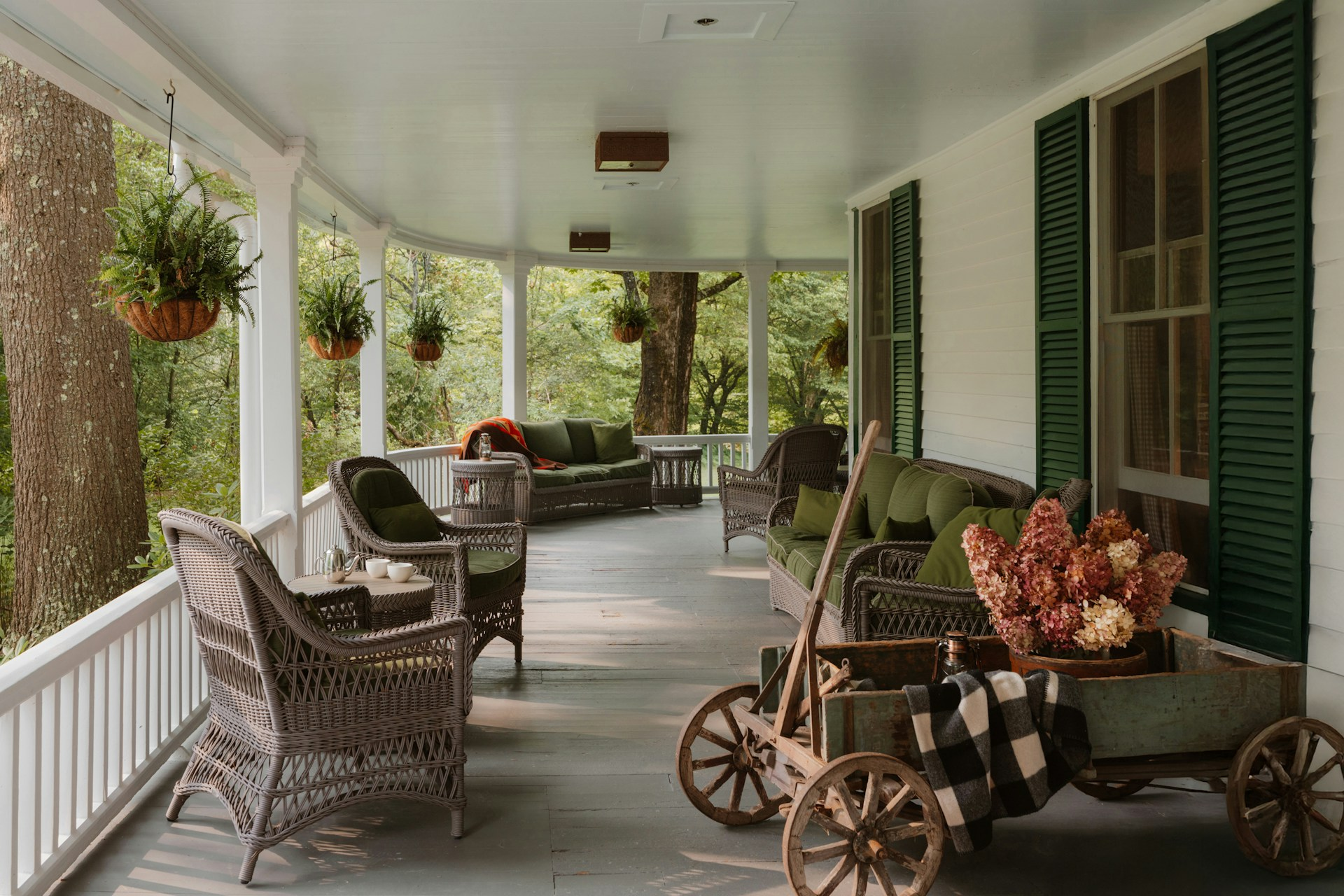
Walk through an older home on a hot summer day and you may notice features that seem charming but puzzling: tall ceilings, transom windows above interior doors, deep porches and windows placed on opposite walls. Many of these were not decoration. They were the air conditioning of their time. The arrival of mechanical cooling in the twentieth century changed how Americans built, where they lived and how their homes looked.
Keeping cool before machines
For most of American history, builders designed homes to manage heat through their shape and materials. High ceilings let hot air rise above living spaces. Tall windows and transoms encouraged air to flow through the house. Wide porches and deep roof overhangs shaded walls and windows. In the South, some homes were raised off the ground to catch breezes and built around central halls or open breezeways that channeled air through the house. Sleeping porches offered a cooler place to rest on summer nights, and shade trees and awnings did their part too.
The invention
Modern air conditioning is generally traced to Willis Carrier, an engineer who in 1902 designed a system to control humidity at a printing plant in Brooklyn, New York. Early systems were large and expensive and were used mainly in factories and, later, in theaters, department stores and offices, where cool air became an attraction on hot days. For decades, home air conditioning remained rare.
After World War II, smaller and more affordable room air conditioners became widely available, and window units began to appear in homes across the country. Central air conditioning followed, gradually becoming a standard feature in many new homes over the following decades.
How homes changed
Once houses could be cooled mechanically, many of the old design strategies became optional. Ceilings got lower. Front porches shrank or gave way to patios out back. Homes could be built with less concern for orientation or cross breezes, and large picture windows became popular even where they let in a great deal of summer sun. Houses became tighter and more closed to the outdoors, and the ranch houses and suburban developments of the postwar years were shaped by this new freedom. Air conditioning is also widely seen as one of the forces that made hot regions of the country more attractive places to live and work, contributing to their growth in the second half of the twentieth century.
What it means for buyers today
If you are touring older homes, the original cooling features are worth appreciating and preserving. A deep porch, working transoms and well-placed windows can still reduce the need for air conditioning on mild days. At the same time, older homes may have had cooling added later, sometimes creatively: window units, ductwork routed through attics or closets, or ductless systems in hard-to-reach rooms. Ask how the home is cooled, how well it works in each room and how old the equipment is.
In newer homes, the opposite question applies: how well does the house hold up if the air conditioning fails during a heat wave? Shade, insulation and window placement still matter. The best homes, old or new, combine smart design with efficient equipment, and a little history helps you recognize both.
Going Deeper: Old Cooling Ideas in a Modern House
Many of the strategies builders relied on before air conditioning still work today, and some homeowners are bringing them back to reduce cooling costs and improve comfort. They are especially relevant in places with long, hot summers.
Shade first
Blocking sun before it reaches the glass is one of the most effective ways to keep a house cool. Porches, awnings, pergolas, exterior shades and deciduous trees all do this. A window shaded from the outside lets in far less heat than one shaded only from the inside.
Moving air
Ceiling fans make a room feel cooler by moving air across the skin, which can let you set the thermostat a little higher. On mild mornings and evenings, opening windows on opposite sides of the house can recreate the cross breezes older homes were designed around. Whole-house fans, which pull cooler outdoor air in and push warm air out through the attic, are another option some homeowners consider in suitable weather.
Managing attic heat
Attics can become extremely hot in summer, and that heat radiates into the rooms below. Adequate insulation, proper attic ventilation and, in some cases, radiant barriers can help. A qualified contractor can explain what suits a particular house.
Choosing light colors
Lighter roofs and exterior surfaces tend to absorb less heat than dark ones, which is one reason light-colored roofing and siding are common in warm regions.
What to Look For When Touring an Older Home
If you are considering an older house, its history with cooling can tell you a lot. During showings and inspections, look for:
- How cooling was added. Ducts may run through attics, closets or soffits. Ask how well each room is served.
- Original features that still work. Operable transoms, tall windows that open and functional porches can still help on mild days.
- Insulation levels. Many older homes were built with little or no insulation. Upgrades can make a big difference with modern equipment.
- Window condition. Original windows can be beautiful but drafty. Restoration, storm windows or replacement are all possibilities, each with trade-offs.
- Moisture. Adding air conditioning to an older home changes how moisture moves through walls and crawl spaces. Ask the inspector to look for condensation or damp areas.
Questions for Any Home in the Heat
- Which rooms are hardest to keep cool, and why?
- What do summer utility bills typically look like for this house?
- How old is the cooling equipment, and how has it been maintained?
- Are there shade trees, porches or awnings on the hottest sides of the house?
- How is the attic insulated and ventilated?
Questions Buyers Ask
Can a historic home be cooled without damaging its character?
Often, yes. Options like ductless systems or carefully routed small ducts can cool older homes with less disruption. A contractor experienced with older homes can explain the choices.
Are high ceilings a drawback with modern cooling?
High ceilings mean more air to cool, but they can also feel airy and comfortable, especially with ceiling fans. Comfort depends on the whole system and the house.
Is it worth keeping a front porch I rarely use?
A porch shades the front of the house, adds curb appeal and offers a pleasant outdoor space. Many buyers value porches highly, so it is usually worth maintaining.


