
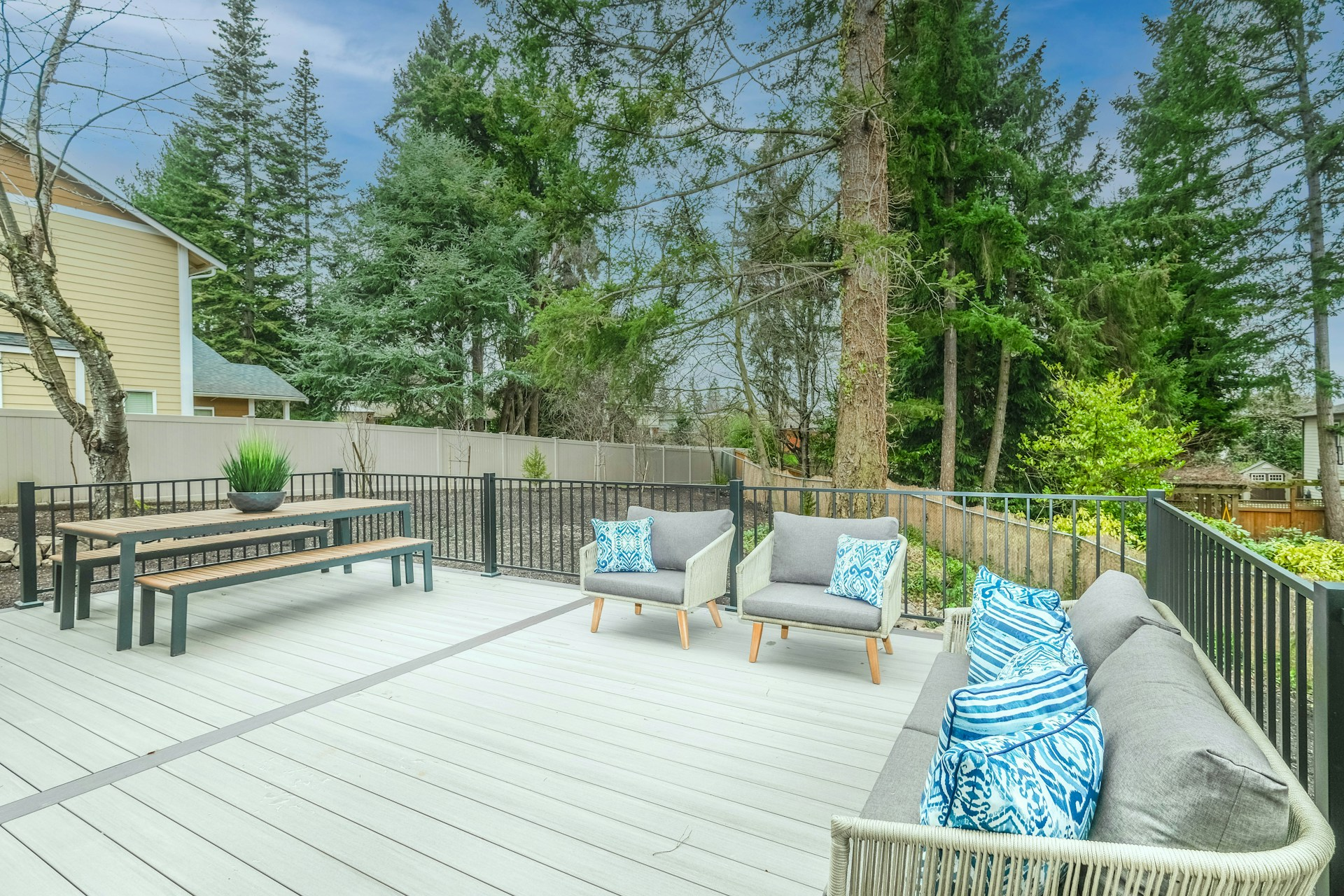
A deck is often where summer happens: morning coffee, grilling, evenings with friends. Because decks are exposed to sun, rain, snow and temperature swings year after year, they wear in ways that are not always obvious. Whether you are touring a home with a deck or settling into your first summer as an owner, a simple safety check is worth the time.
Start where the deck meets the house
Many decks attach to the house through a board called a ledger. This connection is critical, and problems there can be serious. Look underneath where the deck meets the house. The ledger should be securely fastened to the house framing with appropriate bolts or other approved hardware, not just nails, and there should be flashing to keep water from getting behind it. Signs of rot, rust streaks, gaps between the ledger and the house or water stains on the siding below are worth pointing out to an inspector or a qualified contractor.
Check the structure underneath
From below, look at the posts, beams and joists:
- Posts should sit on solid footings, not directly on soil, and should stand straight.
- Look for wood that is cracked, soft or discolored. Pressing a screwdriver into suspect spots can reveal rot.
- Check joist hangers, the metal brackets that hold the joists, for rust or missing fasteners.
- Notice any sagging, bouncing or swaying when someone walks across the deck.
Inspect the surface, rails and stairs
On top, look for loose, warped, split or soft boards, raised nails or screws, and large splinters. Railings deserve special attention. Push firmly on them; they should not wobble or give. Local codes set requirements for railing height and the spacing between balusters, which matters for children’s safety, and older decks may not meet current requirements. Stairs should have solid treads, sturdy supports, a graspable handrail where required and good lighting for evening use.
Consider materials and maintenance
Wood decks need periodic cleaning and sealing or staining to resist moisture and sun damage. Composite decking resists rot, but it can still hide structural problems beneath, since the framing underneath is usually wood. Ask the seller when the deck was built or last refinished and whether it was permitted. The local building department may have records of deck permits, which can tell you whether the structure was inspected when it was built.
When to call a professional
A home inspector will usually evaluate a deck as part of a general inspection. If the inspector raises concerns about the ledger, footings, framing or railings, have a qualified contractor or structural professional take a closer look before your inspection period ends. For a deck you already own, repeat this check every spring, before the season of gatherings begins. Keep grills a safe distance from railings and siding, follow the grill manufacturer’s guidance and avoid crowding the deck beyond what it was built to hold.
A well-built, well-maintained deck can serve for many summers. A few minutes of careful looking now helps make sure yours does.
A Step-by-Step Spring Deck Check
For owners, a yearly walk-through is easier when it follows the same order every time. Set aside an hour on a dry day, bring a flashlight, a screwdriver and a notepad, and work through these steps.
- Clear the surface. Move furniture, planters and the grill so you can see every board.
- Sweep and look. Remove leaves and debris from between boards, where trapped material holds moisture.
- Walk the whole deck slowly. Notice any boards that flex, feel soft or sound different underfoot.
- Test the railings. Push and pull at several points along each section, including posts and corners.
- Check the stairs. Look at treads, stringers and where the stairs meet the ground or a landing.
- Go underneath. Examine the ledger, posts, beams, joists and hardware for rot, rust, loose fasteners or movement.
- Look at the ground. Make sure water drains away from the posts and footings, and that soil is not piled against wood.
- Write down what you find and photograph anything that needs attention, so you can compare next year.
Routine Care Through the Year
Most deck problems develop slowly, and regular care keeps them small:
- Keep it clean. Sweep regularly and clear the gaps between boards so water can drain.
- Manage moisture. Move planters occasionally and use pot feet or saucers that do not trap water against the boards.
- Refinish on schedule. Wood decks typically need cleaning and a fresh coat of sealer or stain periodically. Follow the product’s guidance and check whether water still beads on the surface.
- Trim vegetation. Plants that grow against or under the deck hold moisture and can hide damage.
- Tighten hardware. Snug up loose screws and bolts, and replace any fasteners that are corroded.
- Watch for insects. Carpenter bees and other wood-boring insects favor exposed, unfinished wood.
Warning Signs That Need Prompt Attention
Some findings should not wait for the next convenient weekend. Stop using the affected area and consult a qualified contractor or structural professional if you notice:
- A gap opening between the deck and the house.
- A railing that moves noticeably when pushed.
- Posts that are cracked, leaning or soft at the base.
- Joists or beams that sag or show significant rot.
- Heavily rusted or missing connectors and hangers.
Grilling, Gatherings and Everyday Safety
How you use a deck matters as much as how it was built. Place the grill on a stable surface, away from railings, siding and overhanging branches, and keep a fire extinguisher within reach. Keep stairs clear of planters and clutter, and make sure there is enough light to see each step after dark. For larger gatherings, spread people across the deck and yard rather than packing everyone onto one section, and keep heavy items such as large planters and coolers near posts and beams rather than in the middle of a span. If small children will use the deck, check that gates latch and that no gaps in the railing are wide enough to slip through.
Questions Buyers and Owners Ask
Should I ask the seller to repair a deck before closing?
If the inspector identifies safety concerns, a repair request or credit is reasonable. Ask for repairs to be done by a qualified professional and for receipts or documentation.
How can I tell if a deck was built with a permit?
Ask the seller and check with the local building department, which may keep permit records by address.
Is it safe to put a hot tub on a deck?
A filled hot tub is very heavy. Only place one on a deck designed for that load, and consult a structural professional before adding one to an existing deck.
How long does a deck last?
That depends on the materials, the original construction, the climate and the care it receives. Regular inspection and maintenance help any deck last longer.


