
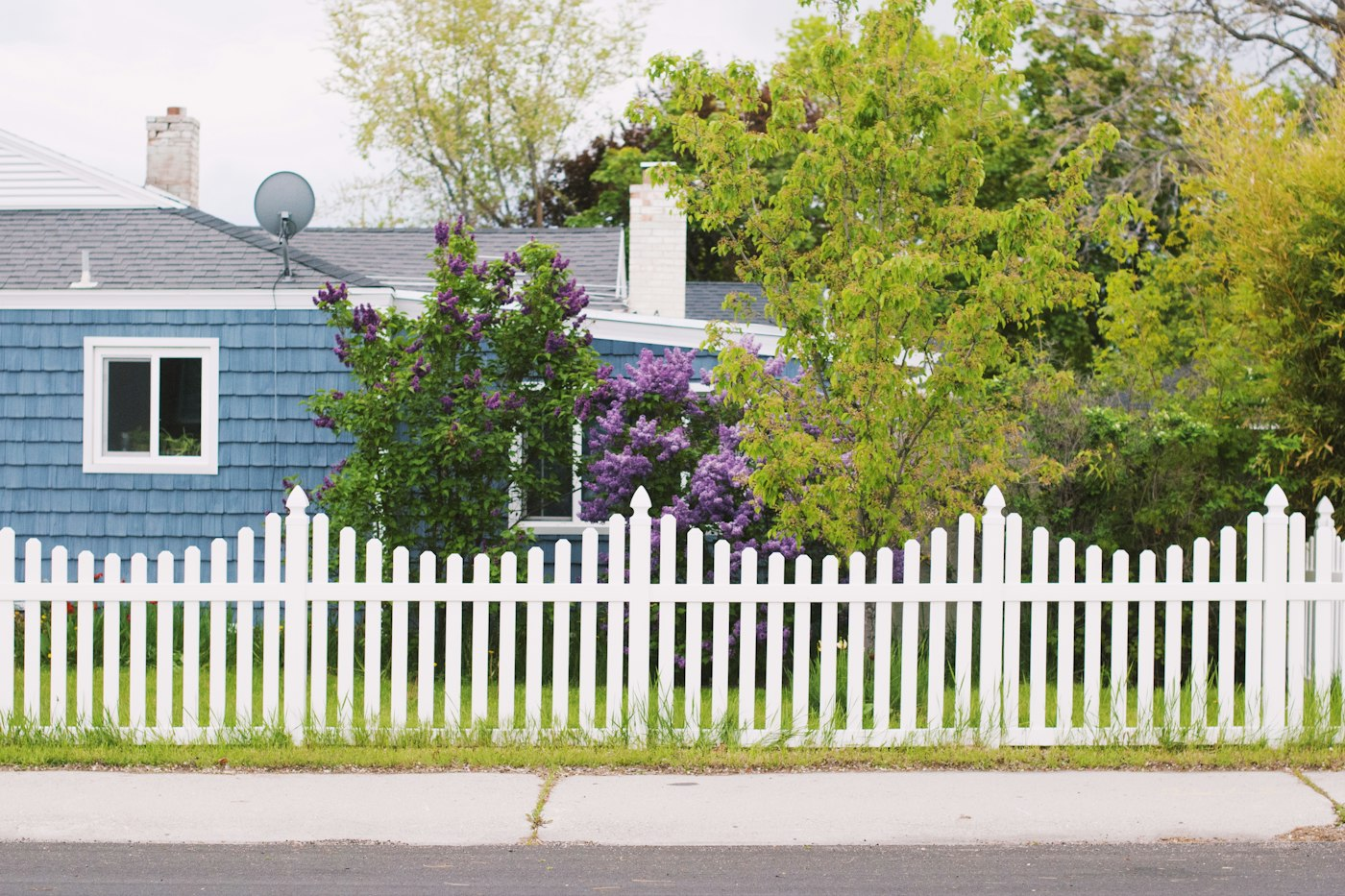
The first summer in a new home is when many owners tackle outdoor projects: a fence for the dog, a new patio, a tree that has to go. Those projects happen at the edge of your property, which means they happen at the edge of someone else’s too. A little communication and a few precautions let you improve your yard without starting your time on the street with a dispute.
Know where the line is first
Existing fences, hedges and mowing patterns are not reliable boundaries. Before you build anything near the edge of your lot, find the survey or plat from your closing documents, and if the line is uncertain, consider having a licensed surveyor mark the corners. Check for easements, which may limit what you can build in certain strips of the yard. Then contact 811, the national call-before-you-dig number, several days before any digging so underground utility lines can be marked. Fence posts and tree planting count as digging.
Fences: permits, rules and a heads-up
Many towns require a permit for a fence and set limits on height, location and materials, and homeowners associations often add their own approval process. Some places also have rules or customs about which side of the fence faces the neighbor. Check with your local building department and your association before you order materials.
Even when no approval is needed, tell the neighbors who share the line what you are planning and when the work will happen. It is a small courtesy that prevents surprises, and it gives them a chance to mention anything you should know, like a buried sprinkler line or a pet that gets anxious around work crews.
Trees that cross the line
Branches and roots do not respect property lines. Rules about trimming a neighbor’s tree, removing a tree that straddles a boundary or handling damage from a falling limb vary by state and locality, and some communities protect certain trees. Talk with your neighbor before cutting anything that is not clearly yours, and hire a licensed, insured arborist for large limbs or anything near power lines. If a disagreement arises, a local attorney can explain how the law works where you live.
Drainage, noise and the work itself
- Avoid changes that send more rainwater toward a neighbor’s property, such as redirecting downspouts or regrading toward their yard.
- Learn your local noise rules, and keep loud work to reasonable hours even when the rules allow earlier starts.
- Ask contractors to park courteously and keep the street and any shared driveway clear.
- Check whether a dumpster or materials stored on the street need a permit.
- Aim outdoor lights and security cameras at your own property, not into the neighbors’ windows or yard.
Most friction between neighbors comes from surprise rather than the project itself. A short conversation before work starts, a quick follow-up when it is done and a willingness to fix anything that affected the other side go a long way toward making a new street feel like home.
A Step-by-Step Plan for a Property-Line Project
Whether it is a fence, a patio, a garden bed or a tree removal, following the same sequence for every outdoor project near the edge of your lot keeps things smooth with the neighbors and the local rules.
- Define the project. Write down what you plan to build or change, the materials and the approximate location.
- Confirm the boundary. Review your survey or plat, and hire a surveyor if the line is uncertain or the project sits close to it.
- Check the rules. Contact your local building department and, if applicable, your homeowners association to learn about permits, setbacks, height limits and approval steps.
- Call 811. Request utility marking several days before digging, and wait until the lines are marked.
- Talk with the neighbors. Share your plans, the timeline and the contractor’s name. Listen to any concerns.
- Hire the right professionals. Choose licensed and insured contractors where required, and get the scope and schedule in writing.
- Do the work considerately. Keep noise to reasonable hours, keep debris on your side of the line and clean up each day.
- Follow up. Check in with the neighbors when the project is finished, and address anything that affected their property.
Mistakes That Lead to Disputes
- Building to an old fence. Previous owners may have placed a fence inside or outside the true line. Replacing it in the same spot can carry the error forward.
- Trimming without asking. Even when you have the right to trim overhanging branches, cutting heavily without a conversation can damage the tree and the relationship.
- Ignoring drainage. A new patio, fence footing or garden bed can change how water flows. Watch the first heavy rain after any project.
- Letting contractors use the neighbor’s yard. Workers sometimes need access along the line. Ask the neighbor first, and protect their lawn and plantings.
- Skipping written agreements. If you share the cost of a fence or agree on tree work with a neighbor, put the terms in writing.
Questions New Owners Ask About Property Lines
Who pays for a fence on a shared line?
That depends on local rules and any agreement between neighbors. Some neighbors split the cost; others build entirely on one side at one owner’s expense. Discuss it before you build, and put any agreement in writing.
Can I plant a hedge right on the line?
Plants grow, and roots and branches will extend over time. Many owners plant a few feet inside their own line to allow for growth and maintenance access. Check any local or HOA rules about plantings near the boundary.
What if a neighbor’s tree looks dangerous?
Share your concern with the neighbor in a friendly way, and consider asking an arborist for an assessment. If the tree is near power lines, contact the utility company.
What should I do if I find out a structure crosses the line?
Do not remove anything right away. Talk with your neighbor and, if needed, a real estate attorney, who can explain your options under local law.
Do I need to tell my neighbor before a surveyor comes out?
It is not always required, but it is a thoughtful step. Surveyors may need to walk near the boundary and set markers at the corners, and a quick note to the neighbors avoids confusion when they see stakes or flags appear in the yard.


