
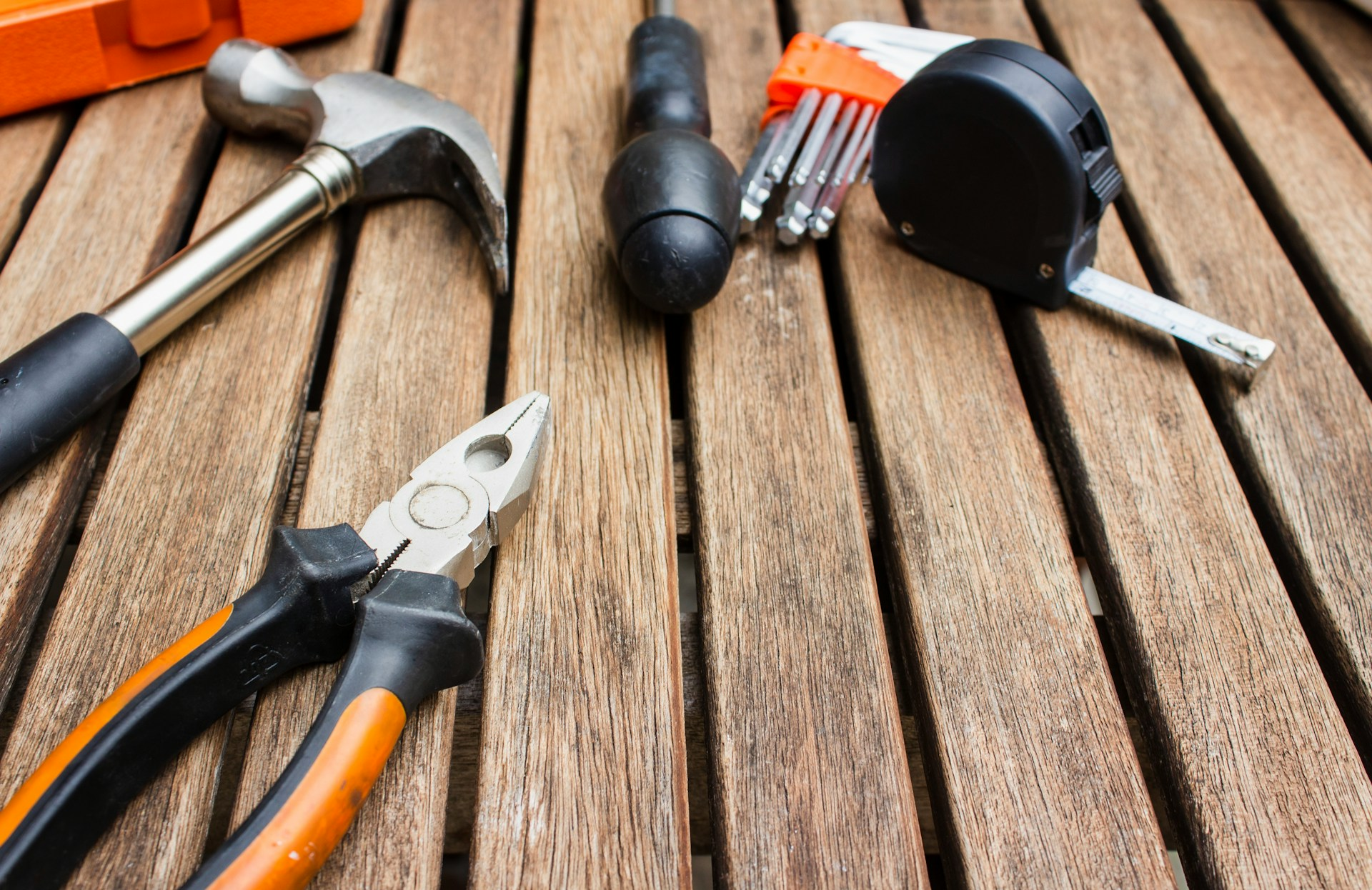
One of the first surprises of homeownership is how often you need a tool. A cabinet hinge loosens, a picture needs hanging, a toilet keeps running, a smoke alarm chirps in the middle of the night. You do not need a garage full of equipment, but a basic kit kept in one place turns small annoyances into quick fixes, and it helps you recognize when a job is beyond your skill.
Hand tools for everyday fixes
- Screwdrivers: a multi-bit screwdriver covers most needs, with common sizes of flat and Phillips heads.
- Hammer: a standard claw hammer for hanging pictures and light work.
- Tape measure: useful for furniture, curtains, projects and shopping.
- Level: a small level keeps shelves and frames straight.
- Pliers and an adjustable wrench: for gripping, tightening and loosening fittings.
- Utility knife: for opening boxes, cutting materials and trimming old caulk.
- Stud finder: helps you mount heavier items securely.
- Putty knife and spackle: for patching small holes in walls.
A few power and specialty tools
A cordless drill with a set of bits is the one power tool you are likely to use constantly, for hanging shelves, assembling furniture and driving screws. A flashlight or headlamp is essential for looking under sinks, in attics and during power outages. A sturdy step ladder lets you change bulbs, reach high shelves and test smoke alarms safely. A plunger designed for toilets, plus a simple drain snake, handles most clogs. A caulk gun makes it easy to reseal tubs, sinks and windows, and a plug-in outlet tester can tell you whether an outlet appears to be wired correctly, though anything beyond replacing a cover plate should go to an electrician.
Safety gear and supplies
Keep safety glasses, work gloves and a dust mask with your tools. Store a fire extinguisher in the kitchen, consider others near the garage and on each level, and learn how to use them before you need to. Keep spare batteries for smoke and carbon monoxide alarms. A small assortment of screws, nails, wall anchors, picture hooks, duct tape and painter’s tape rounds out the kit, along with a couple of spare furnace filters in your home’s size.
Outdoor basics
What you need outside depends on your yard. A hose with a spray nozzle, a rake, a shovel, pruning shears and a stiff broom cover most small properties. Whether to buy a mower and other lawn equipment or hire a service is a personal choice that depends on the size of the yard, your schedule and your budget. If you buy equipment, read the manuals and store fuel safely, away from the house.
Know your limits
A toolkit is for simple jobs. Work involving electrical wiring, gas lines, structural changes, roofs or major plumbing is best left to licensed professionals, and some of it requires permits. Before any project, know where your main water shutoff and electrical panel are, and turn off power or water before working on a fixture. Store tools in a labeled box or bin so you can find them quickly, and add to your kit as real needs come up rather than buying everything at once. Over time, you will build the collection that fits your home and your comfort level.
Putting the Kit to Work: Five Common First-Year Fixes
A toolkit earns its keep through small, everyday repairs. Here are a few that many new homeowners face early on, with a general outline of how they are typically handled. Always follow the manufacturer’s instructions for your specific fixtures.
A running toilet
- Lift the tank lid and watch what happens after a flush.
- If the flapper is not sealing, it may need cleaning or replacement. Flappers are inexpensive and usually replaced by hand.
- If the water level is too high and spills into the overflow tube, adjust the fill valve or float.
- Shut off the water at the valve behind the toilet before replacing parts.
A chirping smoke alarm
A periodic chirp usually signals a low battery or an alarm at the end of its service life. Replace the battery with your step ladder and spare batteries, test the alarm, and check the manufacture date on the back. If the chirp continues or the unit is old, replace the alarm.
A sticking door
Tighten the hinge screws first, using a longer screw in the top hinge if the holes are stripped. Humidity can also cause swelling, which sometimes eases as the seasons change. If a door that once closed well begins sticking suddenly, mention it to a professional, since it can occasionally point to settling.
Small holes in drywall
Use the putty knife to apply spackle, let it dry, sand lightly and paint. For larger holes, a patch kit gives the spackle something to bond to.
A slow drain
Remove and clean the stopper, then try a plunger or a drain snake. Avoid mixing chemical drain cleaners, which can be hazardous. If several drains are slow at once, or if water backs up in unexpected places, call a plumber, since the problem may be further down the line.
Organizing and Caring for Your Tools
- Keep everyday tools together. A small toolbox or tote in a hall closet or the kitchen is easier to grab than tools stored in the garage.
- Label bins for hardware. Sorting screws, anchors and hooks into labeled containers saves time on every project.
- Charge batteries regularly. Cordless tool batteries last longer and are ready when you need them if they are kept charged.
- Keep tools dry. Moisture causes rust. Store tools away from damp areas, or use a dehumidifier or moisture absorbers if necessary.
- Write down sizes you need often. Your furnace filter size, light bulb types and the model numbers of faucets and appliances are worth keeping in a note on your phone.
Questions New Homeowners Ask
Should I buy a pre-assembled toolkit?
Pre-assembled kits can be a convenient starting point, but some include tools you will rarely use. Many people start with a modest kit and add quality individual tools as needs arise.
Is it worth renting tools instead of buying?
For tools you need only once or twice, such as a floor sander or a large pressure washer, renting or borrowing can make sense. Buy the tools you will use regularly.
How do I know when to call a professional?
If a job involves electrical wiring, gas, structural elements or roofing, or if you feel unsure about any step, call a licensed professional. A mistake can cost far more than the service call.


