
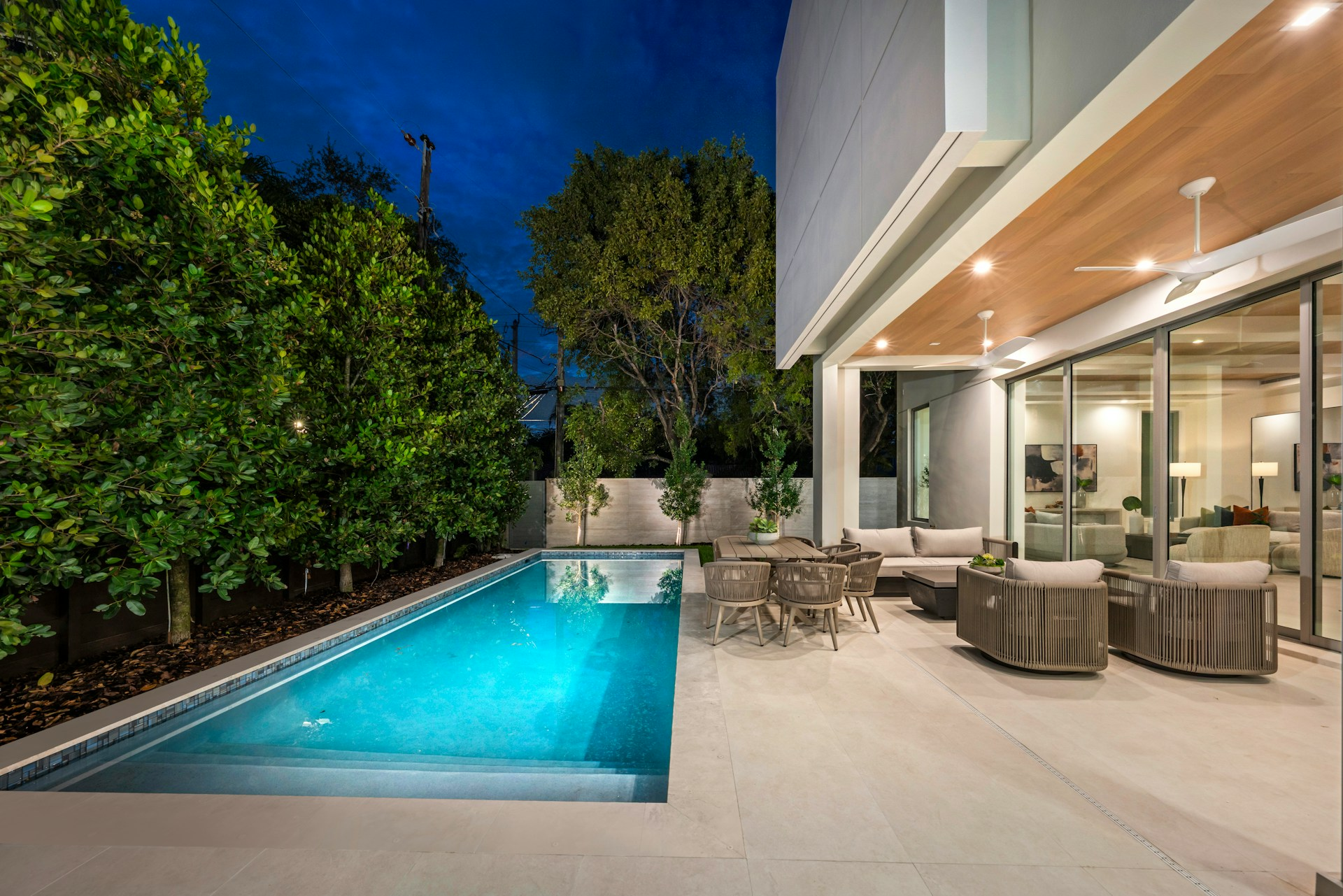
Few features say summer like a backyard pool. On a hot June afternoon, a house with sparkling water out back can be hard to resist. A pool can bring years of enjoyment, but it also brings ongoing maintenance, safety responsibilities and insurance considerations. Going in with clear eyes helps you decide whether a pool home is the right fit for you.
Know what kind of pool it is
In-ground pools are typically concrete, vinyl-lined or fiberglass, and each has different maintenance needs and life cycles. Concrete surfaces may need periodic resurfacing, vinyl liners eventually need replacement and fiberglass shells have their own care requirements. Above-ground pools are generally simpler and may or may not be included in a sale, so confirm it in your contract. Also ask whether the pool uses chlorine or a saltwater system, whether it is heated and, in colder climates, how it is opened and closed each season.
Plan a dedicated pool inspection
A general home inspector may look at a pool only briefly or exclude it entirely, so ask what your inspector covers. For a more thorough evaluation, consider a pool inspector or an experienced pool service company. They can check:
- The pool surface or liner for cracks, stains, leaks or wear
- The pump, filter, heater and any automation equipment
- Plumbing, and signs of leaks such as unexplained water loss
- Drain covers, skimmers and lights
- The surrounding deck for cracks, trip hazards and drainage
- Electrical safety, including bonding and protective devices, which may call for a licensed electrician
Ask the seller for maintenance records, the ages of the equipment and any repair history.
Take safety seriously
Pools carry real safety responsibilities, especially around young children and visiting guests. Many localities require barriers such as fences with self-closing, self-latching gates, and some require alarms or other measures. Requirements vary, so check with your local building department about what applies, and do not assume an existing setup meets current rules. Consider extra layers of protection, like door alarms and a safety cover. The U.S. Consumer Product Safety Commission’s Pool Safely campaign at poolsafely.gov offers practical guidance.
Talk to your insurance agent
A pool can affect your homeowners insurance, particularly liability coverage. Some insurers have specific requirements for fencing, diving boards or slides, and some recommend higher liability limits or an umbrella policy. Get a quote for the specific home early in your contract period, and ask exactly what the insurer requires before closing.
Be realistic about upkeep
A pool needs regular attention: testing and balancing the water chemistry, cleaning, running the pump and filter, and seasonal opening and closing where winters are cold. You can do much of this yourself or hire a pool service. Either way, it takes time and an ongoing budget, plus eventual equipment replacement. Ask yourself how often you will truly use the pool and whether the enjoyment is worth the work. For many owners it is; for others, a community pool turns out to be the better fit.
Questions to Ask the Seller About the Pool
Beyond records and equipment ages, a few direct questions can tell you a lot about how the pool has been cared for and what to expect.
- Who has maintained the pool, and how often? Is that service available to continue if you want it?
- Has the pool ever leaked, and how was the leak found and repaired?
- When was the surface last refinished or the liner last replaced?
- Has any equipment been replaced, and are there warranties that transfer?
- Were permits obtained for the pool, the fence and any later work?
- Are covers, cleaning tools, robotic cleaners or chemicals included in the sale?
- Does the pool area drain well after heavy rain?
- Have there been any problems with the pool lights or underwater electrical components?
If you are buying during the cooler months and the pool is closed, the inspection may be more limited. Ask your inspector what can and cannot be evaluated, and talk with your agent about how to address the parts that cannot be tested until the pool is opened.
Your First Season as a Pool Owner
If you decide to buy, a little preparation makes the first season smoother and safer.
Before you swim
- Confirm that all gates latch and close properly and that any required barriers are in place.
- Have the water tested and balanced, either by yourself with a test kit or by a pool service.
- Learn how to turn the pump and any heater on and off, and where the equipment’s breakers are.
- Store pool chemicals according to their labels, in a cool, dry place away from children and pets, and never mix chemicals.
Every week
- Skim debris, empty skimmer baskets and brush the walls and floor as needed.
- Test the water and adjust chemistry according to the product directions or your service provider’s guidance.
- Check the water level and look for any unusual drop that could signal a leak.
As the season changes
- Clean or backwash the filter according to the manufacturer’s instructions.
- In cooler months, follow a proper closing or winterizing process for your type of pool and climate.
Questions Buyers Ask About Pool Homes
Does a pool add value to a home?
It depends on the area, the pool’s condition and what buyers in that market prefer. In some places a pool is a strong selling point; in others, some buyers see it as extra upkeep. Ask your agent to show you comparable sales with and without pools in the area you are considering.
Can I remove a pool I do not want?
Pools can be removed or filled in, but the process may require permits and proper engineering, and the work can be significant. Check with your local building department and get estimates before buying with removal in mind.
Is a saltwater pool maintenance-free?
No. Saltwater systems still require testing and balancing, and the salt cell needs periodic cleaning and eventual replacement. Many owners find the water pleasant, but the system still needs regular care.
Should I get a separate inspection for an above-ground pool?
If the above-ground pool is included in the sale, having it looked at is a good idea, especially the walls, liner, pump and electrical connections. If it is not included, confirm when the seller plans to remove it and what the yard will look like afterward.


