
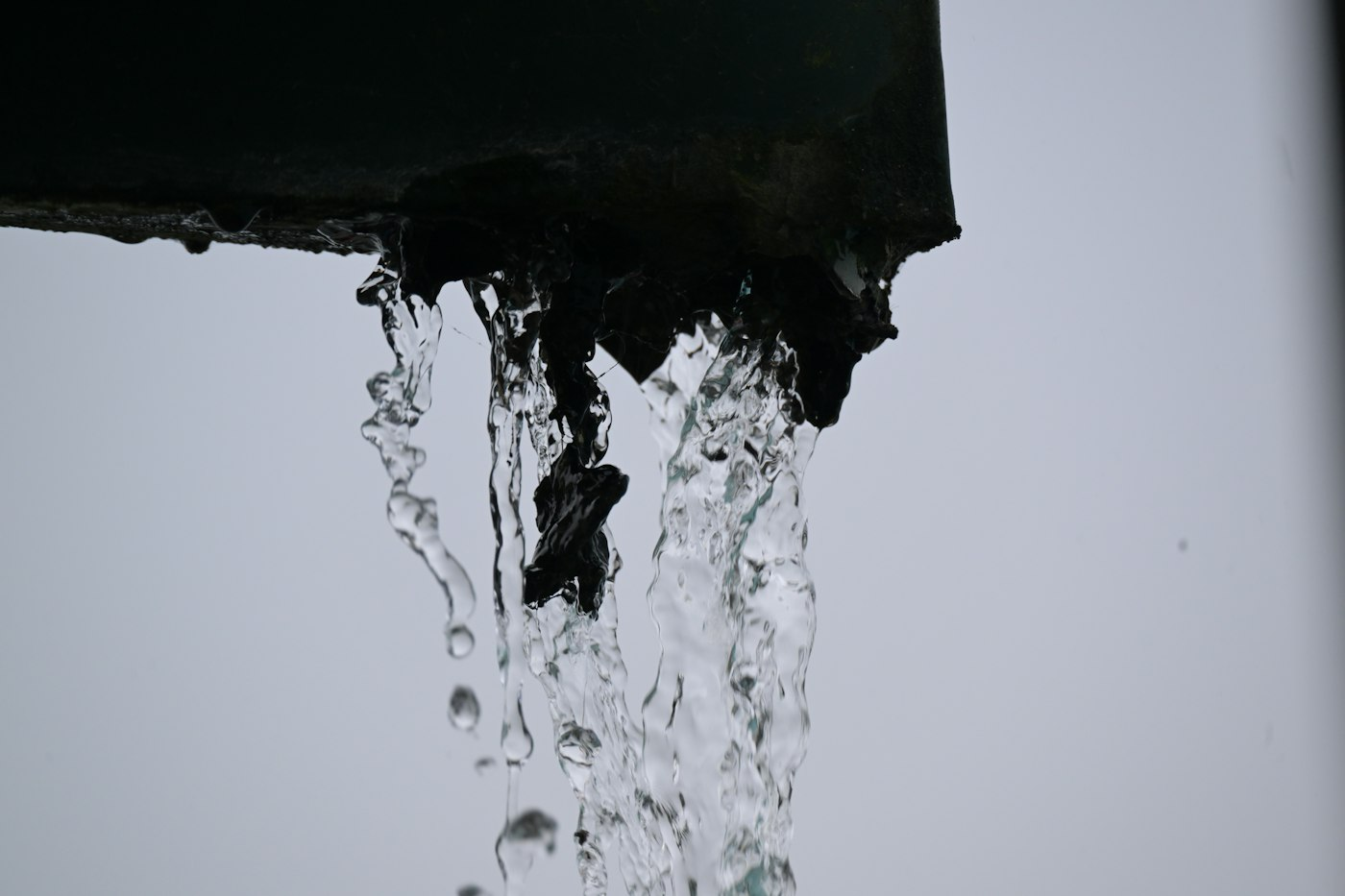
Buyers groan when a showing lands on a rainy day. They should be pleased. Water is the single most common source of expensive problems in a house, and rain shows you exactly where it goes. A dry-day tour tells you how a home looks; a wet-day tour tells you how it works. Here is what to watch for.
Outside: follow the water
Start at the roof and work down. Gutters should carry water to the downspouts without overflowing; cascades over the edge mean they are clogged, undersized or pitched wrong. Downspouts should discharge several feet from the house onto splash blocks or into extensions or drains, not straight at the foundation.
Then look at the ground. The soil should slope away from the house on every side. Puddles against the foundation, soggy mulch beds pressed against siding, or a driveway that drains toward the garage are all signs that water is being invited in. Check window wells for standing water and look at where the yard’s low spots are and whether they drain. Note any neighbor’s downspouts or slopes that send water onto this lot.
Inside: the lower level tells the story
Go to the basement or crawlspace and use your nose first. A musty smell on a wet day points to moisture even when surfaces look dry. Then look for:
- White, chalky mineral deposits on block or concrete walls, which show where water has passed through and evaporated.
- Horizontal stain lines on walls or posts that mark past water levels.
- Damp or discolored patches at the base of walls, especially in corners.
- Rust at the bottom of metal posts, appliance legs or the furnace cabinet.
- A sump pump, and whether it is running. Ask how often it runs and whether it has a backup.
- Stored items raised off the floor on pallets or blocks, which can suggest an owner who has learned a lesson.
Ceilings, windows and the attic
Look at ceilings below bathrooms and under the roof for stains or fresh patches of paint. Check the drywall beneath windows for softness or bubbling, which can indicate failed flashing or caulk. If you can, ask to see the attic: daylight through the roof deck, damp insulation, stained rafters or rusty nail tips all deserve an inspector’s attention.
Roof and exterior walls
Water running down the face of the siding rather than off the roof edge means a missing drip edge or overflowing gutters. Look at where the roof meets walls, chimneys and vents, since those junctions are where leaks start. Staining on brick or siding below a window can show where water has been escaping for a while.
What to do with what you find
Very few of these signs are deal-breakers on their own. Grading can be corrected, gutters extended, a sump pump added, flashing repaired. What matters is knowing the scope and cost before you commit. Share everything you noticed with your inspector so they can look closely, and ask whether a specialist, such as a drainage or foundation contractor, should take a look. Compare what you saw with the seller’s disclosure. Then, with real information, decide whether to proceed as is, ask for repairs or a credit, or move on. A rainy afternoon is cheap compared with learning the same thing after closing.
Why Drainage Matters Especially in North Georgia
Many properties in Cartersville, Bartow County and the surrounding North Georgia communities sit on clay soil and sloped lots. Clay absorbs water slowly, so heavy spring rain tends to run across the surface or collect in low areas instead of soaking in. On a hillside lot, water from uphill can be directed toward a house if grading and drainage are not designed to move it around. These conditions are common and manageable, but they make a rainy-day look at a home especially useful.
Crawlspaces are also common in the region. Because they are out of sight, moisture problems can develop there without obvious signs upstairs. During a wet-day visit, ask whether the crawlspace has a vapor barrier, whether it has been encapsulated, and whether there is a history of standing water.
A Rainy-Day Walk-Through Checklist
If you get the chance to see a home during or just after a rain, here is a simple order to follow:
- Arrive a few minutes early. Watch the gutters and downspouts from the street before going in.
- Walk the perimeter. Note where water collects, where it flows and whether any of it heads toward the house.
- Check the driveway and walkways. Look for pooling, washouts or water running toward the garage.
- Look at retaining walls. Check for weep holes that drain, leaning sections or water seeping through.
- Go to the lowest level first. Check the basement or crawlspace entry before your nose gets used to the house.
- Look up. Check ceilings, especially under bathrooms, roof valleys and skylights.
- Take photos. Capture anything you want to share with your inspector.
Common Drainage Fixes
When an inspection or a rainy-day visit turns up a drainage concern, the solution is often more straightforward than buyers fear. Common fixes include:
- Cleaning and repairing gutters, or adding gutter guards in areas with heavy leaf fall.
- Extending downspouts or connecting them to underground drain lines that carry water away from the house.
- Regrading soil so it slopes away from the foundation.
- Adding swales or French drains to redirect water across a sloped lot.
- Installing or upgrading a sump pump in a basement or crawlspace.
- Adding a vapor barrier or encapsulating a crawlspace to manage moisture.
Costs and suitability vary greatly by property. A qualified contractor can assess the specific situation and provide a written estimate.
What This Means for You
A rainy showing is one of the best free inspections a buyer can get. It will not replace a professional inspection, but it shows you how a property handles water in real conditions, which is exactly what you want to know before you commit. Treat every clue as a question rather than a verdict.
Drainage Questions Buyers Ask
Is a wet crawlspace a deal-breaker?
Not necessarily. Many crawlspace moisture issues can be addressed, but you want to understand the cause and the likely cost before deciding.
Can I ask the seller to fix drainage problems?
You can request repairs or a credit during your due diligence period. Your agent can help you decide which approach makes sense.
What if it never rains during my search?
Ask the seller about drainage history, read the disclosure carefully and rely on your inspector to look for signs of past water.


