
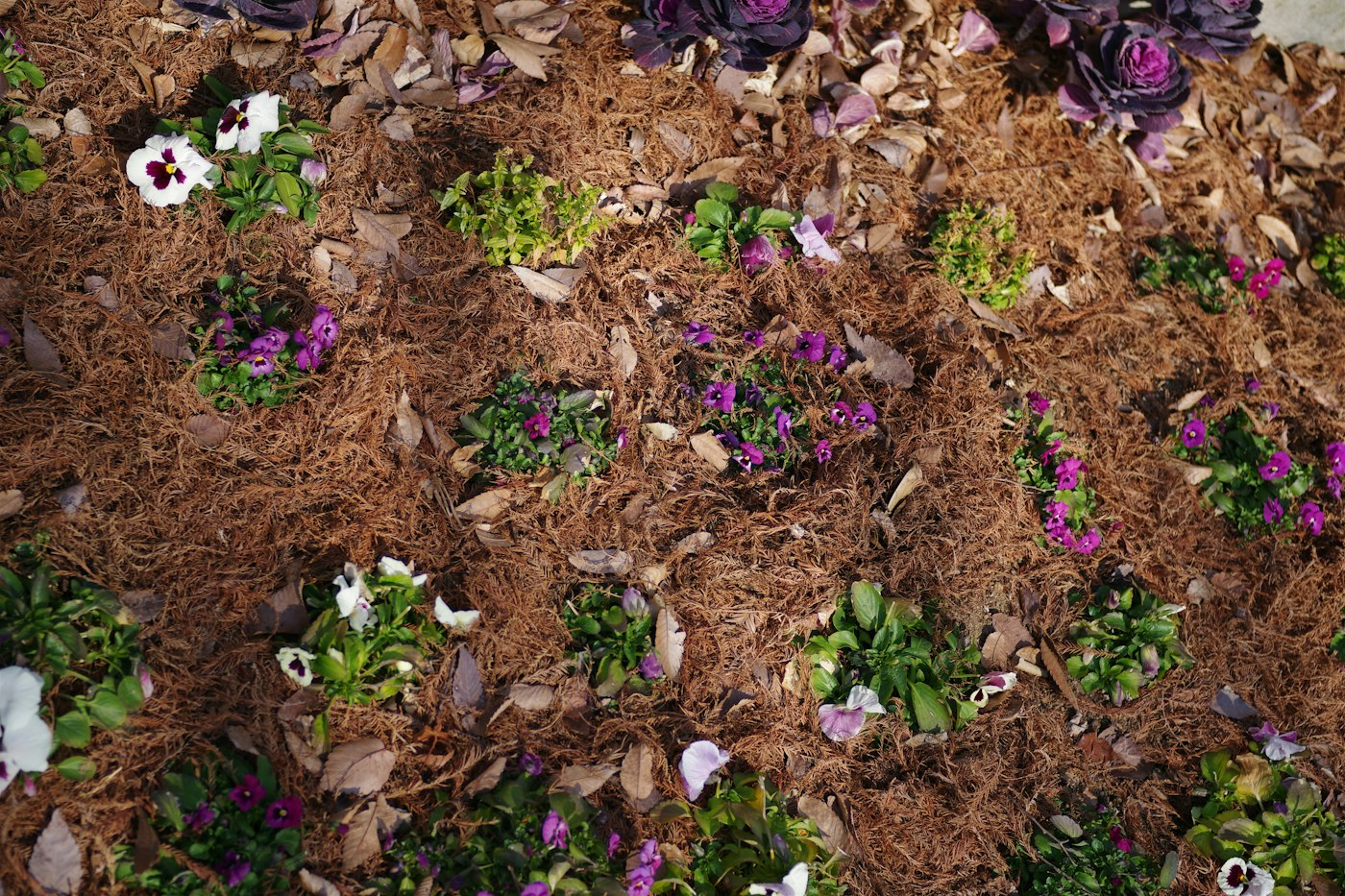
By April, the cleanup is done and the yard is ready for its finishing touches. This is where sellers often overspend or overplant. The goal is not a garden; it is a front yard that looks intentional in a photograph and welcoming from the sidewalk, and that stays that way for the weeks the home is on the market.
A few principles
- Use fewer varieties in larger groups. Three kinds of plants repeated along a bed read as a design; twelve kinds read as a nursery.
- Choose colors that contrast with the house. White flowers disappear against white siding; deep greens and bright blooms stand out against brick and pale paint.
- Keep scale in mind. Foundation plantings should stay below window sills, and nothing should block the walk, the house numbers or the front door.
- Favor plants that look good all season rather than ones with a spectacular two-week bloom.
Containers at the entry
Pots are the fastest way to add color exactly where buyers look. Use matching containers in a finish that suits the house, and group them in odd numbers, with one on each side of the door or a trio on the steps. A simple formula works: one tall upright plant for height, a few mounding plants to fill, and something that trails over the edge. Check that the containers do not crowd the entry or create a tripping hazard, and that they drain so water does not stain the porch.
Beds and borders
Define the edge of each bed cleanly, then add a layer of mulch a couple of inches deep. Keep mulch pulled back from the house foundation and from the trunks of shrubs and trees, where it can trap moisture. Choose one mulch color and use it everywhere for a consistent look. Fill obvious gaps with annuals in the same color family, and trim foundation shrubs so they are neat but not sheared into unnatural shapes.
Annuals, perennials and timing
For a sale, annuals are usually the better value: they bloom immediately and keep going for months. Perennials are an investment for the next owner and may not flower during your listing. Pay attention to your area’s last frost date before planting tender annuals; a local garden center or cooperative extension office can tell you when it is safe. In the meantime, cool-season flowers such as pansies tolerate chilly nights and can bridge the gap.
Flowers draw the eye, but the lawn frames the picture. Mow regularly, edge along the walkway and driveway, and water bare patches you have reseeded. A lawn does not have to be flawless; it has to look tended.
Keeping it up while listed
- Water containers daily in warm weather; they dry out faster than beds.
- Pinch off spent blooms so plants keep flowering and look fresh.
- Pull weeds as they appear, before they are visible from the street.
- Replace any plant that fails rather than leaving a gap.
- Before each open house, sweep the walk and refresh the mulch where it has scattered.
Photograph the front of the house after planting and compare it with your before picture. If the entry draws your eye and nothing distracts from it, the planting has done its job.
Planting Notes for North Georgia Yards
Spring planting in Cartersville, Bartow County and the surrounding communities comes with a few regional considerations worth keeping in mind.
- Clay soil. Much of the area’s soil is heavy clay. When planting beds, loosen the soil and mix in compost or a good planting mix so roots can spread and water can drain. In containers, use a quality potting mix rather than garden soil.
- Mulch choices. Pine straw and hardwood mulch are both common in Georgia. Pine straw gives a classic Southern look and spreads easily; hardwood mulch offers a darker, more uniform appearance. Pick one and use it consistently.
- Sun and heat. Late spring can turn warm quickly. Choose plants suited to the light each bed gets, and remember that containers in full sun may need water every day.
- Frost timing. North Georgia can have cool nights well into spring, particularly in the higher elevations to the north. The local extension office is the best source for timing in your specific area.
A Step-by-Step Planting Plan
- Look at the front from the street. Take a photo and identify where the eye lands and where gaps or distractions are.
- Decide on a simple palette. Choose two or three plant types and one or two flower colors that contrast with the house.
- Prepare the beds. Remove weeds, loosen the soil and re-cut the edges.
- Plant in groups. Set plants in clusters or repeating rows, spaced to fill in without crowding.
- Add the containers. Place matching pots at the entry with a tall, mounding and trailing plant in each.
- Mulch and water. Apply mulch evenly, keeping it away from the foundation and plant stems, then water thoroughly.
- Retake the photo. Compare before and after, and adjust anything that draws the eye in the wrong direction.
Planting Mistakes That Show in Photos
- Planting too small. Tiny plants spaced far apart can look sparse in listing photos. Fewer, larger plants in groups often look fuller right away.
- Blocking windows or paths. Overgrown shrubs or tall plants near the walk can make the home look closed off.
- Too many colors. A mix of every shade can look busy. A limited palette reads as intentional.
- Ignoring maintenance. Plants that wilt or die during the listing period can hurt more than help. Choose what you can realistically keep watered.
- Forgetting the back yard. Buyers will walk out back. It does not need flowers, but it should look neat.
Curb Appeal Planting Questions
Should I hire a landscaper?
If you are short on time or the beds need major work, a one-time refresh can be worth considering. For most homes, a simple plan and a weekend of work does the job.
Will buyers expect the plants to stay?
Plants in the ground are generally treated as part of the property. If you plan to take containers or special plants with you, let your agent know before listing.
How much should I spend?
Spend enough to look tidy and welcoming. Fresh mulch, clean edges and a few well-placed containers often provide most of the impact without a large budget.


