
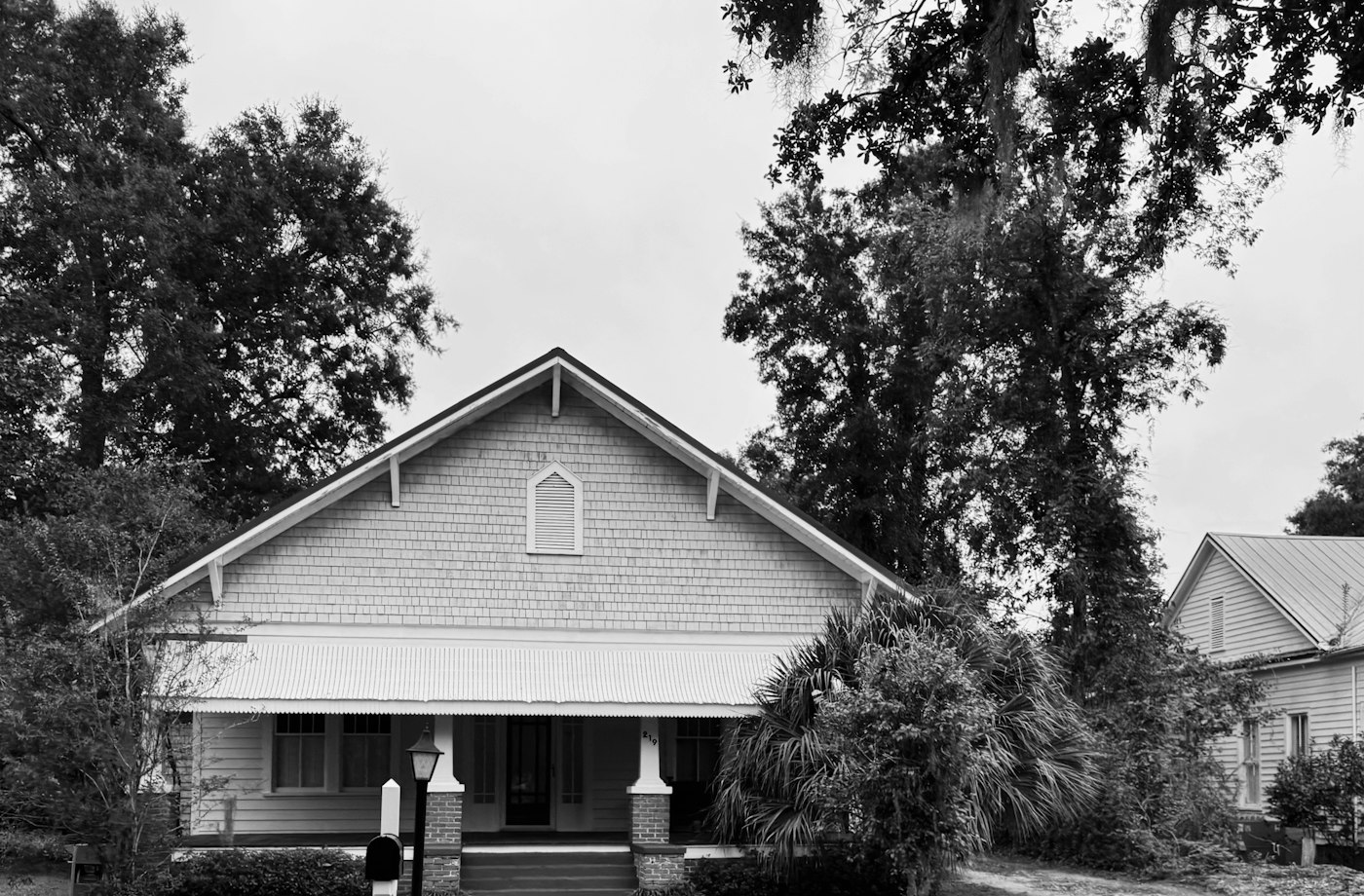
A front porch does something no other part of a house does. It is neither fully inside nor fully outside, neither private nor public. For most of the nineteenth century it was the social center of the American home. Then, for several decades, builders stopped including it. Today it is back in demand. The arc of that story says a lot about how people have wanted to live.
Many roots, one idea
The porch arrived in America from several directions. Dutch settlers brought the stoop, a small raised entry platform. Houses in the South and the Gulf Coast drew on West African and Caribbean building traditions, with deep galleries that shaded walls and caught breezes. The Greek Revival movement of the early 1800s added grand columned porticos. By the middle of the nineteenth century, pattern books and builders’ guides treated some kind of porch as nearly standard, and the Victorian era produced the wraparound verandas that still define many older neighborhoods.
The porch at its peak
Before air conditioning, the porch was where a household spent summer evenings. It was cooler than the house, it caught passing conversation, and it let people watch the street while remaining at home. Porch swings, rocking chairs and screened sections turned it into a true outdoor room. Social life happened there: courting, neighbor visits, children playing within sight of adults. The porch connected the private house to the public street, and that connection was the point.
Why it disappeared
Several changes arrived together in the middle of the twentieth century. Air conditioning made the inside of the house the comfortable place in summer. Radio and then television pulled evening attention indoors. The automobile made streets noisier and less pleasant to sit beside, and it also made the front of the house a place to park rather than to linger. Postwar ranch houses turned their living space toward the backyard, replacing the front porch with a patio behind the house and a picture window in front. For a few decades, a new house with a real front porch was unusual.
The revival
Beginning in the 1980s, planners and architects associated with what became known as New Urbanism argued for a return to walkable streets and houses that engaged with them, and the front porch was central to that vision. Communities designed on these principles, starting with a few well-known examples in the Southeast, required or encouraged porches deep enough to actually use. Mainstream builders noticed buyer interest and brought the porch back as a standard option in many developments.
Not every porch earns its keep, however. The ones people use share a few traits: they are deep enough for chairs and a small table, they are raised enough to feel separate from the sidewalk, and they have some shelter from sun and rain. A porch that is a narrow strip of concrete under a roof is a decoration; one that fits two rocking chairs is a room.
For buyers and sellers
Buyers consistently respond to a welcoming porch, and in spring a seller can show it at its best with a clean floor, a pair of chairs, a plant or two and working lights. Buyers touring older homes should look at the porch’s structure, since posts, railings and floorboards exposed to weather need maintenance, and an inspector will check them. A porch asks for a little care. In return it offers something the rest of the house cannot.
Porch Styles You Will See Across North Georgia
Drive through older town centers and newer neighborhoods around Cartersville and the surrounding North Georgia communities, and you will see many of the chapters of the porch’s story side by side. Knowing the common types helps buyers recognize what they are looking at and what each needs.
- The full-width front porch. A porch that runs the length of the front of the house, often under the main roof or a shed roof. It is common on farmhouses and older homes and is one of the most usable designs.
- The wraparound porch. Extending around one or more corners of the house, this style offers shade at different times of day and plenty of seating space.
- The craftsman porch. Often supported by tapered columns on masonry piers, this style is associated with early twentieth-century bungalows.
- The columned portico. A smaller, more formal entry with columns, reflecting classical influences. It is beautiful, though often less suited to sitting.
- The screened porch. Whether on the front, side or back, screening adds protection from insects and makes the porch usable for more of the year.
- The rocking-chair porch on newer homes. Many recent subdivisions offer front porches designed to be deep enough for chairs, reflecting the revival described above.
What a Buyer Should Check on Any Porch
Porches live outdoors, so they wear faster than most parts of a house. When touring, take a few minutes to look closely:
- Floorboards: look for soft spots, rot, cupping or gaps, especially near the steps and where water drips from the roof edge.
- Posts and columns: check the bases, where water can collect and cause decay.
- Railings: press gently to see whether they are secure. Loose railings are a safety concern.
- Steps: make sure they are level, solid and evenly spaced.
- Ceiling and roof: look for stains, sagging or peeling paint that might signal a leak.
- Foundation and piers: look under the edge, where visible, for settling or damaged supports.
- Attachment to the house: note any gaps or separation where the porch meets the main structure.
A home inspector will evaluate these items as part of the inspection, and a contractor can advise on repairs.
Caring for a Porch in a Southern Climate
Georgia’s warm, humid summers and frequent rain are hard on outdoor wood. A little routine care goes a long way:
- Sweep often to keep leaves and pollen from holding moisture against the floor.
- Repaint or reseal floors and railings when the finish begins to wear.
- Keep gutters clear so water does not spill onto the porch.
- Leave space under potted plants so water can drain and the floor can dry.
- Check for insect activity in wood at the base of posts and steps.
Many Southern porches also feature a pale blue ceiling, a long regional tradition. Whatever the color, a fresh coat of paint on the porch ceiling brightens the entry and is an easy update before a sale.
Front Porch Questions
Can a porch be added to a house without one?
Often, yes, depending on the design of the home, the lot, setbacks and local permitting. A contractor and the local building department can tell you what is possible.
Is a screened porch worth it?
Many households in the South use screened porches for much of the year. Whether it suits you depends on how you plan to use the space.


